Three Types of Knowledge

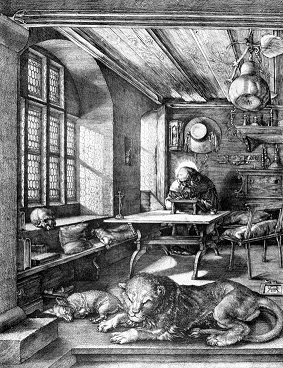
St. Jerome in His Study- Albrecht Dürer. 1514

St. Jerome in His Study- Albrecht Dürer. 1514

When first initiated into the lodge as an Entered Apprentice, we state that we desire “Light in Masonry.” At the time, it may not be entirely evident what that light is. However, as we progress through our Masonic life, we learn that Light in Masonry is equivalent to knowledge, and in fact equivalent to certain kinds of knowledge. In the ancient Mystery School traditions, there were considered to be 3 primary types of knowledge, each one of which is exemplified by one of the three degrees of Masonry.

To us, in modern times, we tend to consider knowledge to be knowledge. No matter how you learn something, no matter how you feel you know something, it is all simply “knowledge.” This was not the case for the Ancients. In fact, the Greeks had multiple words that all could be translated as “knowledge,” but meant vastly different things. Those are what I would like to explore in this post. The Greco-Egyptian mystics and initiates into the Mysteries were astutely aware that different knowledge can be imparted in different ways, and that a person can learn different things better in different ways. For example, have you ever tried to learn calculus through meditation? Would you try to learn welding through charity? I feel very certain that it can’t be done. Each type of knowledge has a certain source inherent in it.

Episteme – Knowledge Through Craft – The Entered Apprentice

The first type of knowledge I’d like to explore is episteme (from Greek έπιστὴμη, pronounced eh-pee-STAY-may). This is what I will call, “knowledge through craft.” Episteme is knowledge that is gained through working with your hands, or practicing a craft, a hobby, a trade, etc. Although I do not intend to imply that any of these types of knowledge are lesser or greater than another, this type of knowledge would relate to the 1° – Entered Apprentice. In this first degree, we are taught to rectify our bodies and to improve the soma (from Greek σῶμα, SOH-mah), which is what Gnostic teachings call our physical body – and the anima (from Latin, AH-nee-mah), which is the base aspect of our soul that we share in common with all living creatures. We are taught to use the working tools of an Entered Apprentice to remove the “vices and superfluities” of our lives, in order to purify ourselves. It’s interesting to note that the 1° working tools (specifically the Gavel) are the only ones that we apply in a physical manner to ourselves. Whereas the tools of the 2° and 3° are applied in a more metaphorical manner (“admonishing” us or “reminding” us), the C∴G∴ is used directly to divest ourselves of vices and superfluities. This is yet another allusion to the knowledge of this degree being the kind that can only be gained by doing. It is through this “hands-on” knowledge that we can become more in touch with our physical selves, and with the physical aspect of our soul, in order to purify it.

Mathesis – Knowledge Through Thought – The Fellowcraft

Mathesis (μάθησις, MAH-thay-sis) is probably the closest of these three to our modern idea of knowledge. This is knowledge gained through thought and reason, knowledge such as mathematics (a word that shares a common etymological root with mathesis), science, philosophy, etc. The second degree of Freemasonry, that of Fellowcraft, is intensely concerned with this scientific knowledge. We are taught the seven liberal arts and sciences – some of which admittedly overlap a bit with the next type of knowledge – in order to raise our minds to a higher level. Through mathesis, we are able to improve the aspect of our soul called the psyche (from Greek ψυχή, p’soo-KHAY). The psyche is the part of our being centered in our brain – it is knowledge and reason, an aspect of our being that we do not share with the other creatures of the Earth – an aspect that makes us uniquely human.

Pathesis – Knowledge Through Emotion – The Master Mason

I will admit that, at first glance, “knowledge through emotion” is an odd thing to associate with the Master Mason, but it is the best term I could think of to describe this type of knowledge. Pathesis (from Greek πάθησις, PAH-thay-sis), is perhaps the purest form of knowledge, one that cannot be put into words. This form of knowledge is what the Greco-Egyptian mystery schools were centered around, and what we still focus on today in our Fraternity. As I’ve mused on before, there are certain truths that are so sublime that they cannot be put into words. The symbols of the degrees, the emotions of the degrees, the feelings you feel when you’re going through the degree – these things change you as a person. Perhaps you cannot quite explain how, or maybe even why, but you know deep inside yourself that they have changed you. You know something more about yourself, and in fact even about humanity and the Universe. This equates with the portion of the soul called the pneuma (from Greek πνεῦμα, p’NOO-mah), which is the “spirit” of the body – the portion we share with the Holy Spirit of the Godhead.

Gnosis – Bringing It All Together

I know I mentioned that there are only three types of knowledge that I’d like to explore today, and that is true. But Gnosis (from Greek γνῶσις, g’NOH-sis or NOH-sis) is the umbrella term used to refer to the three collectively. Gnosis as a more specific term, as used by the Gnostics, refers to the divine knowledge that we spend our entire lives searching for. Herein lies a very interesting connection with alchemical teachings. One of the key maxims in alchemy is “solve et coagula” – separate and combine. In practical alchemy, a material must be broken down into its basic parts before it can be purified and brought back together as a more perfect whole. The same aspect applies to us as men and Masons. The three degrees of Masonry teach us to separate our thoughts and, through doing so, to separate the very parts of our soul, in order to purify them on their own so that they may be recombined into a more perfect whole. Our entire lives are to be spent in the purification state – for truly we will not see ourselves brought together into a purified whole until we cross through to that Lodge Eternal. My charge to you, brethren, is to forever improve your craft and your hobbies; forever improve your mind through study; and forever improve your emotions through circumspection and compassion – in doing this, I promise you, you will purify the very essence of your soul.

_________________________________________

Thank you for reading The Laudable Pursuit!

If you enjoyed this piece, please feel free to share it on social media sites and with your Lodge.

For more information on Bro. Ian B. Tuten, Please CLICK HERE:

Also, visit us on Facebook: https://www.facebook.com/TheLaudablePursuit


Bibliography:

Baum, Julius. The Mysteries. Princeton, N.J.: Princeton University Press, 1955.

Walker, Benjamin. Gnosticism: its history and influence. Wellingborough, Northamptonshire: Aquarian Press, 1983.

Hermes Trismegistus. Corpus Hermeticum. Translated by G. R. S. Mead.

Sickels, Daniel. General Ahiman Rezon. 1968.


How to Dispose of a Dead Body- Resurrection and Freemasonry


Spoiler Alert- This Piece Involves a Discussion on the Master Mason Degree. While we love all EA's and FC's, this may be one that you need to tab and save for later.

There is a question that Masons have learned to ask themselves. It springs from our Ritual and our common experience. Many a Mason has lay awake at night pondering the question I will pose to you this evening. We have each wondered, If it were required, how would I dispose of a dead body?

Now, this is not one of our more serious questions, but it has entered the thoughts of many a mason, because I have been present at the discussions. I do not wish to imply that the men I associate with are particularly morbid nor more likely to find themselves in possession of a dead body which needs disposing of. Rather, it springs from the example given in the third degree.

First comes the requisite dead body, followed by a short-term solution, that of concealing the body. This has immediate benefits, but a permanent solution must be found - an isolated area in which the body will not later be discovered. When the body is discovered, the gig is up, and yet the problem is then transferred to the other party who again faced with the prospect of how to dispose of a dead body.

In the end, we aren't explicitly given the answer. And so we must ask ourselves: How do I dispose of a dead body?

To be sure, there is a final solution to the problem given in our ritual. The search party gathers around the grave, laments the sad state, sends a plea to the heavens, and finally pokes around at the body like an eight-year-old with a stick and a dead raccoon. They discover - to no one's astonishment - that a body left to rot for several days begins to disintegrate - which means it loses its integrity. Horror befalls the searchers, and so they try various means to overcome this process. We witnesses of the story, however, are pulled from the tale and brought back to reality just at the moment in which a solution is proposed.

It will surprise no one to find that on a dead body, the skin will slip from the flesh, and that the flesh will cleave from the bone. So why did these men attempt to pick up the body? We are told that it was to find more decent interment - but we are never shown that the body was interred afterward. In fact, we are left with the distinct impression that the the body no longer required interment.

The description given is one of Resurrection, or the second rise of the body. Resurrection is a familiar term used in Abrahamic religions, though it is not exclusively used there. Resurrection is commonly misunderstood by those who claim to believe in it.

Some followers of Judaism believe in a collective resurrection of all the faithful. Other ancient Israelites protested, calling death Abaddon, which means “Destruction.”[1] It is also called the “place of silence.”[2] Still others believed that the soul separates from the body at death, and while the unrighteous are abandoned to Sheol, the soul of the righteous is called back to God.[3]

The Koran explains that though every bone but one might decay, Allah will send rain to grow new bones from the one seed bone, which will be used for resurrection.

In Christianity, the term is most commonly applied to its namesake, though it was not universally held to be literal or factual. It was a controversial topic in Christianity's early years, though the belief was preceded in Judaism. In their interaction among the Romans, early Christians earned a reputation for being infatuated with the dead. They were witnessed holding dinners in graveyards and maintaining the graves of the deceased. This was a carryover from early Greek culture, in which tubes were installed into graves so that an animal might be slaughtered, the blood given to the dead, and the meat consumed by the living. Grave reliefs at Sparta show the dead holding a cup into which libations might be poured through these tubes. The covering slab of tombs were often used as meal tables.[4]

As the earliest Christianities often assembled in tombs, their agape meals would be consumed among the dead. Further, there is evidence that early Christians constructed their grave slabs to accommodate meals at the grave, with indentations for bread, cakes, and fish for the living, and wine for the dead. These actions were the result of a common belief in physical resurrection - that the dead body was still associated with the living soul.

Greek philosophy, however, generally argued against physical resurrection. A common grave inscription read, "I was not, I was, I am not, I don't care."[5] Plato argued for the separation of the soul from the body at death, and that the soul was one’s true identity - not the body.[6] In fact, there is no evidence of the Greek concept of a bodiless soul before Plato, who coined the term “a-soma-tos,” or “bodiless, immaterial.” Epicurus maintained therefore that "the soul is a finely-particled body;' and in reference to the disciples of Plato, that "those who say that the soul is incorporeal are speaking nonsense"[7] The Stoics likewise maintained that the soul itself was physical, but not immortal.[8] Greek philosophers would, however, most certainly object to the idea of a resurrected body. One need only view a decayed body to see that it decomposes quickly beyond any use. The best one could hope for was reincarnation into a new body.

Concepts of resurrection continued in Western culture despite the adoption of Greek philosophy. Both Christianity and Judaism have traditions of watching over the dead until burial. The tradition of Judaism is called “sitting Shiva,” where one mourns the loved one and cares for the family for seven days after burial. A watcher, called a “Shomer,” will watch over the body of the deceased and read Psalms until burial, which usually occurs in 24 hours.[9] This evolved from the idea that the soul continued to wait by the body, with the expectation that it might be able to rejoin and continue living. When the body shows its first sign of decomposition after three days, the soul realizes the hopelessness of returning, and goes on to rest until the future resurrection. [10] Loved ones might sometimes continue to visit the grave for those three days with the belief that the soul might also be present.

Ideas of resurrection are common to many religions and philosophies. It is often associated with the idea of an immortal body, as in the glorified body, the light body, the body of bliss, the Soma Athanaton, and the most sacred body.[11] These bodies often are represented as similar to our physical bodies, but with supernatural qualities. They are incorruptible. They are beautiful. They can pass through doors, move faster than wind, and shine brightly.

In the Middle Ages, guilds acted as burial confraternities, in which the guild carried out funeral rites at the death of one of their members.[12] And so, it is natural to assume that those guilds would develop rituals for the care of deceased bodies, pulling from the religious and cultural beliefs common to its members. Since Freemasonry maintains various traditions from these guilds, it has also developed funeral rites. More importantly, as we are all aware, Freemasonry discusses these concepts in the ritual of the third degree.

And so we find ourselves at the grave. It has been discovered to contain the body of our lost brother. Planted nearby is a sprig of acacia, which we are told symbolizes immortality. This is a surprising symbol, considering the sight of the body causes the FC to turn away in horror. The men determine that the indecent burial is not sufficient for such an esteemed brother, and so they endeavor to move the body to a proper grave. Their attempts prove difficult, since they cannot lift the body without destroying it completely.

In this hopeless condition, they find themselves at a loss to remediate the situation. Recall with me the words of Job Chapter 14 in the Hebrew scriptures.

1 Man that is born of a woman is of few days and full of trouble.

2 He cometh forth like a flower, and is cut down: he fleeth also as a shadow, and continueth not.

3 And doth thou open thine eyes upon such an one, and bringest me into judgment with thee?

4 Who can bring a clean thing out of an unclean? not one.

5 Seeing his days are determined, the number of his months are with thee, thou hast appointed his bounds that he cannot pass;

6 Turn from him, that he may rest, till he shall accomplish, as a hireling, his day.

7 For there is hope of a tree, if it be cut down, that it will sprout again, and that the tender branch thereof will not cease.

8 Though the root thereof wax old in the earth, and the stock thereof die in the ground;

9 Yet through the scent of water it will bud, and bring forth boughs like a plant.

10 But man dieth, and wasteth away: yea, man giveth up the ghost, and where is he?

11 As the waters fail from the sea, and the flood decayeth and drieth up:

12 So man lieth down, and riseth not: till the heavens be no more, they shall not awake, nor be raised out of their sleep.

Here is where our prayer might end. And yet, the verses continue, recalling perhaps one of the earliest concepts of resurrection in the Jewish scriptures.

13 O that thou wouldest hide me in the grave, that thou wouldest keep me secret, until thy wrath be past, that thou wouldest appoint me a set time, and remember me!

14 If a man die, shall he live again? all the days of my appointed time will I wait, till my change come.

In this, the FCs find new hope. They reach once more into the grave, and with faith and hope, draw out the body.

And thus the story ends. We are not told of the second burial. The plain fact of the ritual shows the body getting up and walking away, having a seat among the brethren. If our imagination has not failed us, we would see his skin falling off his bones, and limbs dropping around him. It would be a most grisly thought. Instead, the implication is that the problem has been resolved. The brother is whole, and his body gets a second chance. He has been resurrected.

But there is the conflict. The goal of the searchers was to find more decent interment. Have they failed? Or was their goal unnecessary and short-sighted?

I propose the resolution to this conflict is that the body was not reinterred in the ground. Rather, the soul was reinterred into the body.

As most of us generally understand, the initiatic experience is one in which a change is made on the catechumen. We see no physical change, and so the implication is that the change occurs in the psyche or soul of the man. He is hoodwinked and led around, caused to speak the words of others (though within his will), made to experience things without his effort. In this act, we do our best to separate the soul of the catechumen from his body. We move his body for him, and thus his soul is left to tend to itself, and to experience the ritual without the distraction of deciding what to say, where to walk, and how to stand. His eyes are unveiled to see the light of the lodge, but more importantly, the eyes of his heart are opened.

When we have completed our work, the soul, who has stood near the body, observing its death, is left to decide whether it will return to the body or remain at rest. It, too, is filled with horror at the prospect of the darkness in which it had lived for so long within the body, and this soul knows that it will never again tolerate that former darkness. It can only live in light. The body will pass, but the soul is immortal. The soul now sees itself for what it truly is. It finally agrees to the resurrection.

The soul is thus reinterred into the body.

We find ourselves in bodies that are slowly dying. We cannot prevent this deterioration, but we hold hope that we are more than this physical form. As the Greeks taught through the phrase, Soma Sema, the body is a tomb. Our souls are immortal. With that knowledge, we can face our question: How do I dispose of a dead body?

Thank you for reading The Laudable Pursuit!

If you enjoyed this piece, please feel free to share it on social media sites and with your Lodge.

For more information on Wor. Brian Westmoreland, Please CLICK HERE:

Also, visit us on Facebook: https://www.facebook.com/TheLaudablePursuit


End Notes:

[1] Psalm 88:11

[2] Psalm 115:17

[3] http://www.jewishencyclopedia.com/articles/12697-resurrection

[4] Gregory;J Riley. Resurrection Reconsidered (p. 46). Kindle Edition; Ante Pacem, Snyder, Grayden F. Ante Pacem (p. 90-92, 170) Online link: http://books.google.com/books?id=swtI9Cpyl3kC&lpg=PP1&pg=PA91#v=onepage&q&f=false

[5] Gregory;J Riley. Resurrection Reconsidered (p. 38). Kindle Edition.

[6] Gregory;J Riley. Resurrection Reconsidered (p. 32). Kindle Edition.

[7] Gregory;J Riley. Resurrection Reconsidered (p. 37). Kindle Edition.

[8] Gregory;J Riley. Resurrection Reconsidered (p. 39). Kindle Edition.

[9] http://en.wikipedia.org/wiki/Shiva_%28Judaism%29

[10] http://www.biblegateway.com/resources/commentaries/IVP-NT/John/Jesus-Raises-Lazarus

[10]http://www.infidels.org/kiosk/article125.html

[10]http://en.wikipedia.org/wiki/Shemira

[11] Christianity, Tibetan Buddhism, Kriya Yoga, Hermeticism, and Sufism. http://en.wikipedia.org/wiki/Body_of_resurrection

[12] “Throughout the Middle Ages the guilds to a very large extent were burial confraternities; at any rate the seemly carrying out of the funeral rites at the death of any of their members together with a provision of Masses for his soul form an almost invariable feature in the constitutions of such guilds.”  http://en.wikipedia.org/wiki/Christian_burial